
How We Built This: Building a Community Fund
Playbooks and lessons learned from building inVest Ventures from scratch

Special thanks to my incredible inVest teammates - Lauri Moore, Karen Chi, Neil Khare, Lizzie Youshaei, and Mia McConnell - who worked tirelessly alongside their full-time jobs to make this happen.
When I graduated business school and moved to Chicago, I wasn’t thinking about starting a fund. I was mostly just trying to reconnect with people I’d lost touch with.
I’d grab coffee with former LinkedIn coworkers, and the same thing kept happening: someone would casually mention what a LinkedIn alum was building. Then another. Then another. Figma. Confluent. Cricket Health. There were far more than I expected and none of them felt like accidents.
The pattern wasn’t just smart people left a big tech company. It felt deeper than that. It felt cultural.
LinkedIn produced a certain type of builder - empathetic, relationship-oriented, and unusually willing to help before there’s anything in it for them. People kept making intros without being asked. They cared about their reputations in a long-term, almost old-fashioned way. They sold collaboratively. They showed up for each other.
After enough of these conversations, one idea kept resurfacing: there’s an opportunity to bring this entrepreneurial community together.
I cold-emailed James Raybould, a LinkedIn legend, because I knew that if this was going to work, it needed people who represented the culture authentically not just financially. James ended up helping shape the whole idea. We were building a community that invested together so it had a real reason to exist.
The part nobody tells you about starting from zero
At the beginning, there was no credibility. No track record. No firm. No proof that anyone cared beyond nostalgia.
I worried about three things constantly: nobody would join, alumni wouldn’t believe the thesis, and we wouldn’t raise enough money to make it matter. We tried recruiting respected LinkedIn luminaries early, hoping belief would cascade. Some were supportive but support and commitment are very different things. Getting commitments across the line was the hardest thing I’ve ever done professionally.
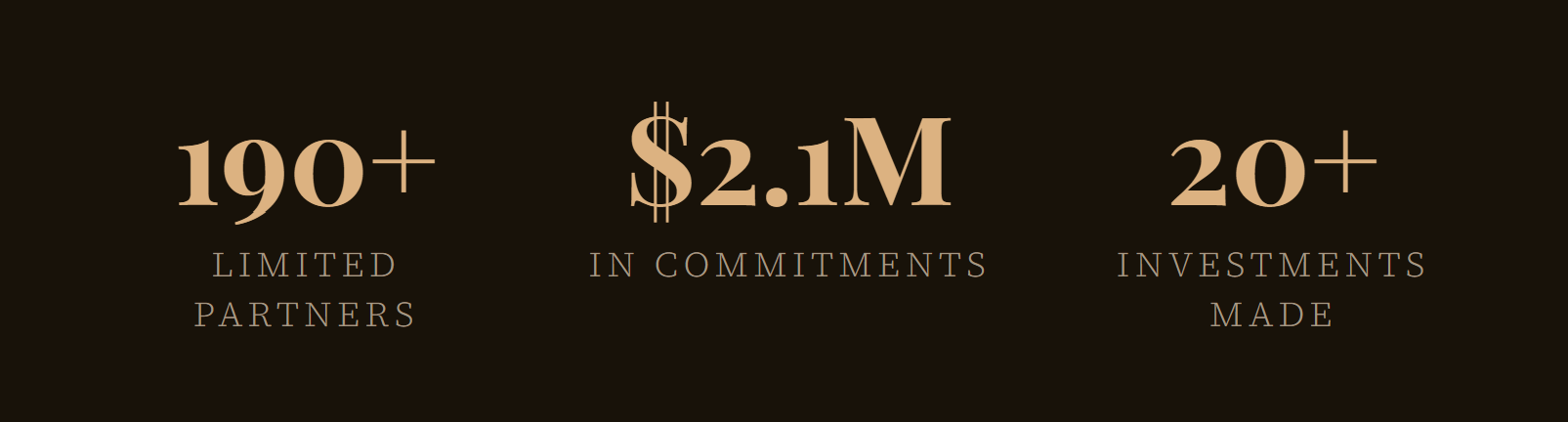
Eighteen months later, we have an incredible team, 190+ LPs, $2.1M in commitments, and 20+ investments made. We’ve helped democratize access to venture and built a community that genuinely brings LinkedIn alumni together. Here’s what we learned building it.
The 5 building blocks of a community fund
If you strip away branding and vibes, every strong community fund is built on the same underlying skeleton.
1. A crisp identity: who’s in and why?
The temptation is to cast a wide net. More people means more capital means more deals, or so the logic goes. But the funds that actually work are almost annoyingly specific about who belongs. Worked at X. Built in Y space. Based in Z city. It needs to fit in one sentence and when a member describes it at a dinner party, they should sound proud, not like they’re still figuring out what to say.
We said “LinkedIn alumni investing together in the next generation of LinkedIn builders.” That was it. We held that line even when it felt limiting, and it turned out to be one of the best decisions we made.
2. A real promise to members, not just founders
This one took us longer to get right than I’d like to admit. Early on, we were so focused on what we could offer founders that we underbaked the member side. But members aren’t just check writers, they need a reason to stay engaged when there’s no deal in front of them. For us that meant education, community events, access to founders earlier than they’d ever see otherwise, and honestly just a sense of tribe. If the only answer to “why should I join?” is deal flow, you’ll have a very quiet Slack by month six.
3. A founder promise that’s specific and grounded in the actual network
Vague platform promises don’t land with founders, and they shouldn’t. What actually resonated when we talked to founders was something simpler: you’re not just getting capital, you’re getting plugged into a group of people who’ve probably done the exact job you’re trying to hire for, sold into the exact buyer you’re targeting, or made the exact mistake you’re about to make. That’s not advice. That’s pattern recognition from people who actually lived it and founders can tell the difference immediately.
4. A sourcing engine that doesn’t rely on vibes
The first few deals will come naturally. Someone knows someone, a warm intro lands, the community is energized and paying attention. That phase always ends. What you build to replace the initial excitement is what actually determines whether the fund has a future. For us that meant a referral process with clear criteria, regular prompts to members about what we were looking for, and being very explicit about what a good referral looked like. You want members to have a specific person in mind when they read your update, not a vague sense that they should probably send you something sometime.
5. Governance that protects the culture before you need it to
Nobody wants to talk about this early on because it feels premature and a little paranoid. But the time to set standards for how deals get shared, how disagreements get resolved, and how you say no to someone without blowing up a relationship, is before any of those things happen. Culture is easy to maintain when everyone’s excited and nothing has gone wrong. It’s the guardrails you build now that hold when things get complicated later.
What actually surprised me
The hardest part wasn’t raising money. It was designing a system where members felt genuine ownership, founders felt tangible help, and signal stayed high as the network grew.
A few things that actually moved the needle:
Start with trust, not scale. Early on, I prioritized people I’d bet my reputation on (LinkedIn luminaries) over broad reach. You can always add members later. You cannot easily subtract culture.
Build for contribution, not consumption. The big unlock was shifting the mindset from “investors who consume deals” to “operators who contribute.” People want to matter. Give them a way to.
Treat the fund as one output of the community, not the goal. The community creates relationships, information advantages, and reputation. The fund monetizes that. When you do it in reverse members feel it immediately.
The unglamorous truth about the tech stack
Nobody warns you that running a community fund means becoming a part-time software architect — except your “architecture” is mostly a collection of tools held together by good intentions and a lot of copy-pasting.
Here’s what actually powered the operation:
For LP management and K-1s, we used PIN, a platform built specifically for community funds. This was one of the few places we didn’t try to DIY it, and we’re glad we didn’t. Fund administration is not where you want to discover the limits of your scrappiness.
For everything else — deal tracking, member directories, diligence notes, investment memos — we lived in Notion and Airtable. Notion became our internal brain: meeting notes, fund documentation, onboarding guides for new members. Airtable handled the more structured stuff, mostly deal flow tracking and anything that needed a database-like view. Google Workspace and Gmail handled communications, which sounds boring until you realize that at 190+ LPs, keeping email organized is its own full-time job.
Was it elegant? No. Did it scale perfectly? Also no. But here’s what I’ll say in defense of the scrappy stack: it forced us to stay lean and think carefully before adding complexity. Every tool we added created surface area for confusion. Every automated workflow we didn’t build was one less thing to break at a bad moment.
The honest lesson is that most early community funds don’t have a tech problem — they have a discipline problem. The tools exist. The harder question is whether your team will actually use them consistently. A perfectly designed Airtable database that nobody updates is worse than a messy spreadsheet that everyone trusts.
If we were starting over, I’d make the same core choices but keep things simple.
The traps nobody warns you about
Becoming a marketing org. If you do too much outward-facing hype without internal substance, you become content-first, community-second. Internal value must exceed external presence.
Confusing “lots of members” with “strong community.” A huge member list is not an edge. Density is.
Decision paralysis from too many voices. Distributed decisioning can turn into distributed responsibility which is a polite way of saying no one decides anything. You need a clear IC owner for every deal.
Misaligned incentives. If members only show up when there’s a deal, the whole thing turns transactional. You need non-deal reasons to participate including shared learning, shared identity, shared wins, shared generosity.
If I were starting again tomorrow
Define identity in one sentence and hold the line for a year. Recruit 25 founding members who will contribute, not just invest. Productize founder support into two or three repeatable offerings. Raise the smallest possible fund that preserves quality and speed. And write down your culture and governance rules earlier than feels necessary.
Community-based funds work when they’re built like a product — with clear user personas, a tight value proposition, a repeatable operating cadence, and a culture worth defending.
The best ones create something rare in venture: a group of people who don’t just invest together, but identify together.
In a market where capital is increasingly commoditized, identity and the density it creates is the thing that compounds.
We didn’t set out to build a fund. We set out to organize something that already existed. Eighteen months in, I’m more convinced than ever that the community was always the asset. The fund was just proof.
Excellent article. Keep building your fund. It’s all about community!